Notes on this page
Chapter 3, Page 12
Summary
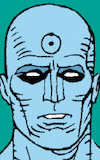
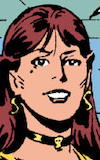
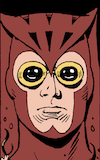
Dr. Manhattan enters a live television interview while, across the city, Dan Dreiberg and Laurie Juspeczyk are surrounded by a street gang. As the host turns toward questions of Afghanistan and military intervention, the threatened pair are forced toward violence of their own.
Panels
Six panels enlarge and combine units of the nine-panel grid, alternating studio and street with near-mechanical regularity. The cutting produces savage match-dialogue: “something really special” introduces a knife, “enter hostilities” frames Dan and Laurie facing attackers, and studio applause becomes the soundtrack to imminent violence. The previous page prepares both settings; the following page intensifies both interrogations.
Environment
The bright ABC studio belongs to a media-saturated alternate America in which a superhuman is both celebrity guest and instrument of foreign policy. Outside, graffiti, fire escapes, litter, and Knot Top fashions place Dan and Laurie in a deteriorating urban world largely invisible to the polished television spectacle.
Color
John Higgins sharply separates the parallel actions. The studio uses exposed cyan, pink, cream, and yellow, making Manhattan’s blue body appear cleanly legible under artificial light; the alley is built from black, violet, orange, and acidic green. Yet both spaces share theatrical saturation, suggesting that televised diplomacy and street violence are differently staged versions of conflict.
Symbols
The page’s central motif is performance: Manhattan faces cameras and an applauding audience, while Dan and Laurie become unwilling performers before a jeering crowd. Their civilian clothes function almost like temporarily discarded masks; confronted by danger, they begin to recover the physical identities and appetites associated with their costumed pasts.
Themes
The page collapses geopolitical and personal violence into one ironic structure. Manhattan is asked whether he will intervene in Afghanistan while Dan and Laurie confront a crisis requiring immediate intervention; the godlike public weapon answers abstract questions as two supposedly retired heroes face concrete danger. Power here is inseparable from circumstance, spectatorship, and the stories institutions tell about justified force.
Graphic Novel Technique
Comics allows the television interview to occupy several panels at once: its words continue across gutters and colonize images from another location. Because the reader can hold studio, alley, captions, laughter, and applause together on the static page, the juxtapositions feel less like ordinary cinematic cross-cutting than a single visual argument—a particularly sophisticated use of parallel montage in mainstream superhero comics of the period.